

Does CBD Help Dogs With Arthritis and Joint Pain?
Quick answer: CBD may help dogs with arthritis feel more comfortable and stay active. In a Cornell University trial, arthritic dogs given CBD oil twice a day had lower pain scores and higher activity within two weeks. A 2023 review of the research found benefits in five of six published canine arthritis studies. For best results, pair CBD with weight control, gentle exercise, omega-3s like salmon oil, and your vet’s guidance.
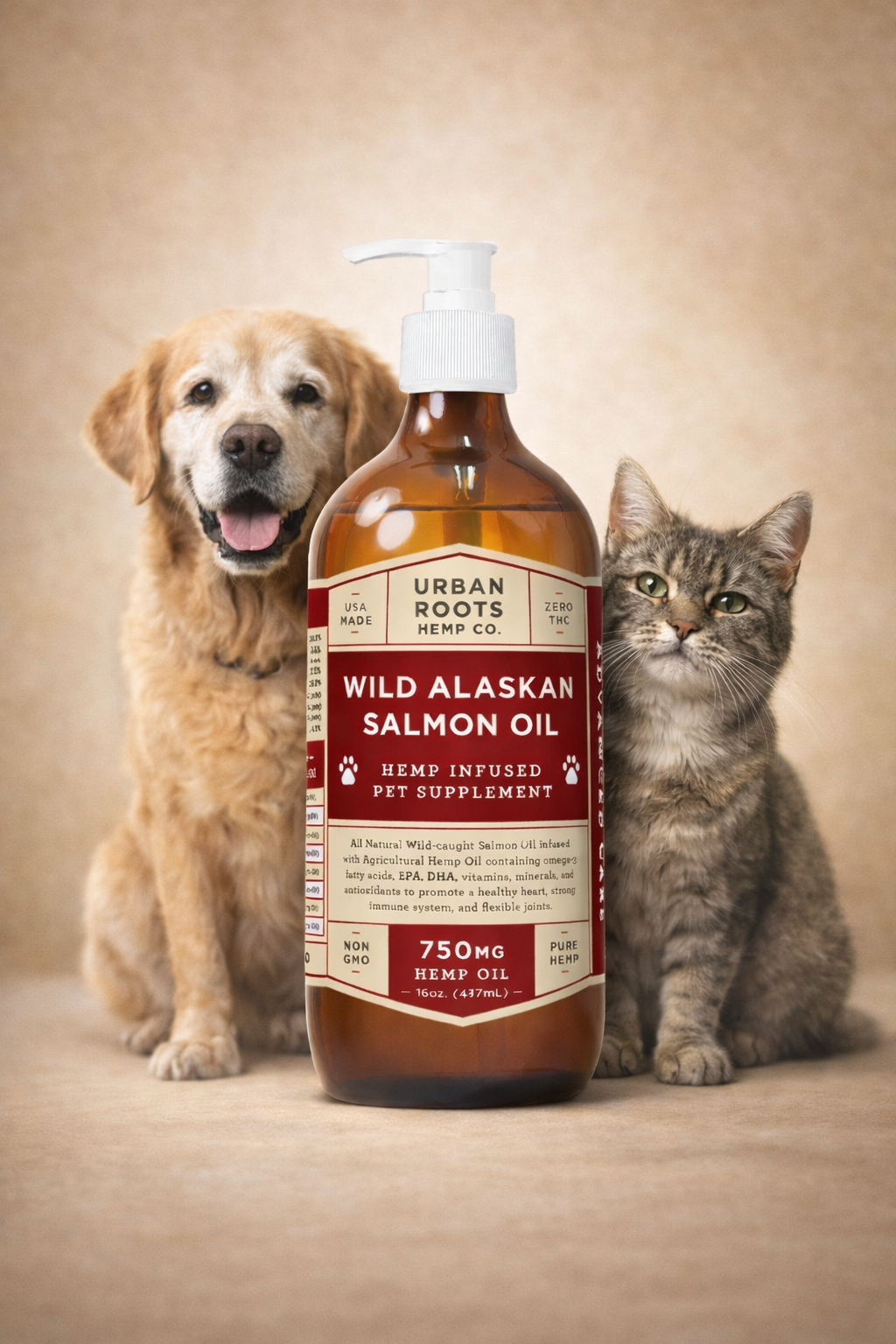
One of our favorite reviews came from a family with a senior dog: “After just two weeks of the salmon oil, our 11-year-old Golden Retriever went from struggling with stairs to jumping on the bed again!” they wrote. “We got our young dog back.”
Stories like this are why so many people look into CBD for dog arthritis. Watching a longtime companion pause at the bottom of the staircase is hard, and most owners want to know what might help. Every dog is different, and results like these aren’t guaranteed, so this guide sticks to what veterinary research shows: how to spot arthritis, what studies say about CBD, how to use it safely, and where salmon oil fits in.
Key takeaways
• Arthritis is common in dogs and easy to miss. Early signs include stiffness after naps, hesitation at the stairs, and lagging on walks.
• Joint pain is the most-studied use of CBD in dogs, and the majority of trials found improvements in pain and activity.
• The best-known study used about 2 mg of CBD per kilogram of body weight (roughly 0.9 mg per pound), given twice a day.
• Side effects in research were usually mild, such as loose stools or sleepiness. Some dogs showed a rise in a liver enzyme called ALP, so periodic bloodwork is a smart habit.
• Omega-3s from fish oil have their own research record for joint comfort, which is why we pair salmon oil with hemp.
• Check with your vet before starting, especially if your dog takes other medications.
What are the signs of arthritis in dogs?
The most common signs of arthritis in dogs are stiffness after rest, trouble with stairs, and less interest in jumping, running, or play.
Osteoarthritis, the form vets see most often, happens as the cartilage cushioning a joint slowly wears down. It’s also more widespread than many owners realize. When researchers screened 500 dogs at general vet appointments, 38% had undiagnosed arthritis, and fewer than half of those dogs had been brought in for stiffness or limping. The Merck Veterinary Manual notes that up to 40% of dogs between 8 months and 4 years old have osteoarthritis, even though owners usually don’t notice symptoms until somewhere between ages 5 and 13.
Watch for:
• Getting up slowly after a nap, or pushing up with the front legs first
• Pausing before stairs, or taking them one step at a time
• Skipping jumps onto the couch, the bed, or into the car
• Falling behind on walks or turning back early
• Avoiding slippery tile or hardwood floors
• A limp or stiff walk, especially after resting
• Irritability when touched near the hips, knees, elbows, or back
If any of these sound familiar, schedule a vet visit. A physical exam and x-rays can confirm arthritis and rule out other causes of limping, like a ligament injury.
How does CBD work for joint pain in dogs?
CBD works with the endocannabinoid system, a network of receptors that helps regulate pain and inflammation throughout a dog’s body.
CBD, short for cannabidiol, is a natural compound found in hemp. Dogs have an endocannabinoid system (ECS) just as people do. A 2023 review in Frontiers in Veterinary Science notes that CBD acts on several ECS receptors, and researchers have found cannabinoid receptors in dogs’ joints, nerves, skin, and digestive tract.
Hemp-derived CBD is non-intoxicating. THC, the compound in marijuana responsible for a high, can make dogs wobbly and trigger other neurological signs, so any pet product should come with lab results showing its THC content.
What does the research say about CBD for dogs with arthritis?
Most published trials have found that CBD reduced pain and improved activity in dogs with arthritis.
The best-known study came from Cornell University’s College of Veterinary Medicine in 2018. Sixteen dogs with osteoarthritis received either CBD oil or a placebo oil twice a day for four weeks, then switched. Neither the owners nor the vets knew which oil a dog was getting. On CBD, dogs had significantly lower pain scores and higher activity levels at both the two-week and four-week checkpoints.
Several studies have followed. Here’s how the main arthritis trials compare:
|
Study |
Dogs |
CBD given |
What they found |
|
Cornell University, 2018 (placebo-controlled) |
16 |
2 mg/kg twice daily for 4 weeks |
Lower pain scores and higher activity at weeks 2 and 4 |
|
Baylor College of Medicine, 2020 (placebo-controlled) |
20 |
20 mg or 50 mg daily, or 20 mg liposomal, for 4 weeks |
Pain dropped with the 50 mg dose and the liposomal form; the 20 mg dose matched placebo |
|
Kogan et al., 2020 (observational) |
32 |
Individually adjusted dose for 90 days, alongside other care |
30 of 32 dogs showed pain relief |
|
Brioschi et al., 2021 (controlled) |
9 on CBD, 12 on standard care alone |
2 mg/kg twice daily for 12 weeks, added to standard medications |
Lower owner-reported pain scores than standard care alone |
|
Mejia et al., 2021 (placebo-controlled) |
23 |
2.5 mg/kg twice daily for 6 weeks |
No measurable difference from placebo |
Kogan and Brioschi results as summarized in the 2023 Frontiers in Veterinary Science review.
The Baylor team reported no changes in the blood markers they tracked. In the Kogan study, 21 of 23 dogs already taking the pain medication gabapentin were able to reduce or stop it after CBD was added.
The 2023 review that pulled these studies together found evidence that CBD can benefit dogs with arthritis. Its authors noted that most trials were small, ran for weeks rather than months, and used different products and doses. They also pointed to a trial in dogs recovering from knee surgery that found no benefit, and suggested CBD may suit long-term joint pain better than short-term pain after an injury or operation.
Is CBD safe for senior dogs?
In published research, CBD has generally been well tolerated by dogs, and most side effects were mild, such as loose stools, occasional vomiting, or sleepiness.
The 2023 review compared safety data from about 20 studies. Stomach upset was the most common issue, and side effects often resolved without stopping CBD. They became more frequent at doses above 10 mg per kilogram, roughly five times the amount used in the Cornell arthritis trial.
The lab result to know about is alkaline phosphatase (ALP), a liver enzyme that rose in some dogs taking CBD for several weeks. Levels generally returned to normal after CBD was stopped, and researchers are still studying what the increase means for long-term health. Senior dogs often get regular bloodwork anyway, so ask your vet whether to recheck liver values once your dog has been on CBD for a few months.
Three safety habits
• Tell your vet about every medication. CBD is processed by the liver, the same organ that clears many drugs. If your dog takes carprofen or another anti-inflammatory, gabapentin, or a seizure medication, your vet should know before you add CBD.
• Skip human CBD products. Some gummies and supplements made for people contain xylitol, a sweetener the FDA warns is dangerous for dogs. Human products are also dosed for adults, not a 40-pound dog.
• Change one thing at a time. Avoid starting CBD the same week as a new food or medication, so you’ll know what’s behind any difference you see.
Why pair salmon oil with CBD for dog joint pain?
Salmon oil supplies the omega-3 fatty acids EPA and DHA, which have improved comfort and mobility in controlled trials of arthritic dogs. Pairing it with hemp puts two well-studied joint supplements into one daily routine.

A review in the Journal of the American Veterinary Medical Association describes EPA and DHA as commonly used to manage arthritis-related inflammation and pain. In a randomized, double-blind trial, dogs given fish oil for three months showed improvements in pain and lameness compared with a placebo group, and those gains tracked with rising omega-3 levels in their blood.
Fish oil works gradually. Canine Arthritis Resources and Education notes that omega-3s need about two months to fully work their way into the body’s cells.
Our Wild Alaskan Salmon Oil + Hemp blends wild-caught Alaskan salmon oil with hemp oil in a pump bottle made for mixing into meals. The Extra Strength (750mg) version is formulated for larger breeds, senior dogs, and pets that need extra hip and joint support. This is the formula from the Golden Retriever review above, and according to his family, he won’t touch his food without it now.
Prefer a dropper? Our full-spectrum pet tinctures come in Small Breed 275mg and Large Breed 600mg sizes, with a natural peanut butter flavor.
How much CBD should I give my dog for arthritis?
The Cornell arthritis study used about 2 mg of CBD per kilogram of body weight (roughly 0.9 mg per pound) twice a day, but the right amount for your dog depends on the product and your vet’s guidance.
Research on canine dosing is still young, and amounts have varied widely from study to study. As an example, the Cornell protocol works out to roughly 55 mg of CBD per dose for a 60-pound dog. That number is research context. For day-to-day use, start with your product’s package directions and review them with your vet, who knows your dog’s weight, age, and medical history.
• Stay consistent. Give CBD at the same times each day. Most arthritis studies used a twice-daily schedule.
• Serve it with a meal. CBD is fat-soluble, and one small study found higher peak blood levels in dogs that had eaten.
• Keep reading. Our guide to finding the right CBD dosage for pets goes deeper on the basics.
How long does CBD take to work for a dog’s joint pain?
Dogs in the Cornell trial showed measurable improvement within two weeks, but give any new joint routine at least four weeks before judging results.
Progress is easiest to see when you check the same everyday moments each week. Researchers lean on owners, too: the Cornell team used the Canine Brief Pain Inventory, a questionnaire that rates a dog’s pain and daily activity.
Track these once a week:
• How quickly your dog gets up after resting
• How they handle stairs, the couch, and the car
• How far they walk before slowing down
• Their interest in play, fetch, or greeting you at the door
What else helps a dog with arthritis?
Keeping your dog lean is one of the most helpful things you can do for arthritic joints, along with regular low-impact exercise and a few simple changes around the house.
A 14-year Purina study of Labrador Retrievers shows how much weight matters. Dogs fed 25% less than their littermates first showed hip arthritis on x-rays at a median age of 12, compared with 6 for the dogs that ate more. Ask your vet what your dog’s ideal weight is and how to get there.
• Keep them moving. Short, regular walks and swimming are easier on joints than occasional long outings.
• Add traction. Rugs, runners, or toe grips help on slick floors.
• Cut down on jumping. Ramps or pet steps make the bed, couch, and car easier to reach.
• Upgrade the bed. Thick orthopedic foam cushions sore hips and elbows.
• Ask about other treatments. Prescription pain relievers, physical therapy, and other vet options can work alongside supplements.
The American College of Veterinary Surgeons notes that with proper management, most dogs with osteoarthritis can live long, active lives.
How do I choose a CBD product for a dog with arthritis?
Look for a CBD product made for pets, with a current third-party lab report that confirms how much CBD and THC it contains.
• Made for pets. Pet formulas use dog-friendly flavors and are sized for animals.
• A lab report you can read. Look for a certificate of analysis (COA) from an independent lab showing CBD and THC levels, and make sure it matches your product. Find ours on the Lab Results page, and contact us for the report on your specific lot.
• Clear spectrum labeling. Full-spectrum products contain CBD plus other hemp compounds, while isolate contains CBD alone. Our full spectrum vs. isolate guide can help you decide which fits your dog.
• A format your dog will take. Mix-in oils work well for food-motivated dogs, and droppers make it easy to give precise amounts.
• A brand you can reach. Pick a company that publishes its testing and answers questions. Urban Roots products are made in Michigan with USA-grown hemp.
Should I talk to my vet before giving my dog CBD?
Yes. Your vet can confirm that arthritis is behind the stiffness, check for medication interactions, and help build a complete joint-care plan.
In Michigan, a law signed in late 2020 allows veterinarians to discuss hemp and CBD products with pet owners, including recommending for or against them. Rules vary in other states. Wherever you live, bring the product and its lab report to your appointment so your vet can see exactly what’s in it.
Frequently asked questions about CBD for dog arthritis
Can CBD replace my dog’s arthritis medication?
That call belongs to your vet, so don’t stop or change a prescribed medication on your own. In several studies, CBD was given alongside standard pain medications, and in one, most dogs taking gabapentin were able to lower or stop it over time.
Is CBD or salmon oil better for dog joint pain?
They work in different ways, so there’s no need to choose. Salmon oil supplies omega-3s that build up in the body over roughly two months, while CBD works through the endocannabinoid system. Our Wild Alaskan Salmon Oil + Hemp combines the two in a single pump.
Will CBD make my dog high?
No. Hemp-derived CBD doesn’t produce a high. That effect comes from THC, which dogs are sensitive to, so check a product’s lab report for THC levels before you buy.
Can I give my dog my own CBD oil?
It’s safer not to. Human formulas are built around human serving sizes, and some contain sweeteners like xylitol that are toxic to dogs. Stick with a product made for pets.
How do I know if CBD is working for my dog?
Watch the same everyday moments for at least four weeks: getting up after naps, climbing stairs, jumping into the car, and how far your dog walks. Steady improvement in those areas is the clearest sign.
Can senior dogs take CBD every day?
Yes, daily use is how CBD has been studied. Most arthritis trials gave it twice a day for 4 weeks to 3 months, and one safety study followed dogs for six months. Ask your vet about rechecking bloodwork, including liver values, during long-term use.
Does CBD help dogs with hip dysplasia?
Hip dysplasia is a common cause of arthritis in dogs’ hips. CBD research has focused on arthritis in general rather than dysplasia specifically, so talk with your vet about where CBD might fit alongside weight control, exercise, and other treatments.
What’s the best CBD for dogs with arthritis?
Look for a pet-specific product with a current third-party lab report, clear labeling, and a format your dog will happily take every day. For senior and large-breed dogs, a salmon oil and hemp blend adds omega-3s to the routine.
The bottom line on CBD for dog arthritis
Arthritis doesn’t have to end your dog’s walks, stair climbs, and couch naps. Research suggests CBD may reduce joint pain and boost activity in arthritic dogs, and it fits easily into a routine that includes omega-3s, weight control, and regular vet care. If your dog is starting to slow down, talk with your vet, then explore our CBD for pets collection, made in Michigan and backed by published lab reports.
This article is for educational purposes only and is not a substitute for veterinary advice. Always consult your veterinarian before giving your pet a new supplement, especially if your pet is pregnant, nursing, or taking medication. These statements have not been evaluated by the Food and Drug Administration. Urban Roots products are not intended to diagnose, treat, cure, or prevent any disease.
-
Posted in
pet-cbd, senior dogs