
Third-Party CBD Lab Testing: How to Read a COA
Third-party CBD lab testing means an outside laboratory analyzes a submitted sample and reports the tests it performed. The resulting certificate of analysis, or COA, can help you compare cannabinoid measurements with a product label. To understand what it establishes, check the sample identity, units and individual test panels.
Already looking for an Urban Roots report? Open our lab-results library. Use this guide alongside the complete PDF and your current product packaging.
How to read a CBD certificate of analysis
- Match the sample to your product. Check the product or sample name, strength, format, sample ID and any batch or lot number. A report for a raw ingredient or a different formula does not establish the contents of your finished product. Ask for help if the identity or sample category does not match your package.
- Check the laboratory and dates. Find the lab's name and contact information, the sample-received date and the report date. Read every page. A date alone does not establish whether the report applies to the lot you are buying.
- Read the cannabinoid results and units. Find CBD, total CBD, THC and any other reported cannabinoids. Notice whether results are expressed as a percentage, milligrams per gram, milligrams per milliliter or milligrams per unit.
- Read the other test panels separately. Look for the specific results and any stated limits for pesticides, metals, solvents, microbial testing or other analyses. A cannabinoid result does not establish that these panels were performed.
- Resolve gaps before relying on the report. Contact the seller or laboratory about missing pages, an unclear sample identity or a result you cannot reconcile with the label.
What do ND, LOQ and “Not Tested” mean?
ND means non-detect on the example report below. It should be interpreted with the laboratory's method and reporting limits, rather than treated as a promise of absolute zero.
LOQ is the limit of quantitation. Read the lab's stated units and definitions; different methods can have different limits.
Not Tested means that the report supplies no result for that panel. It is neither a passing result nor evidence that the sample failed. Where a report gives a pass/fail outcome, read it against the stated criteria for that particular test.
An example from the Urban Roots report library
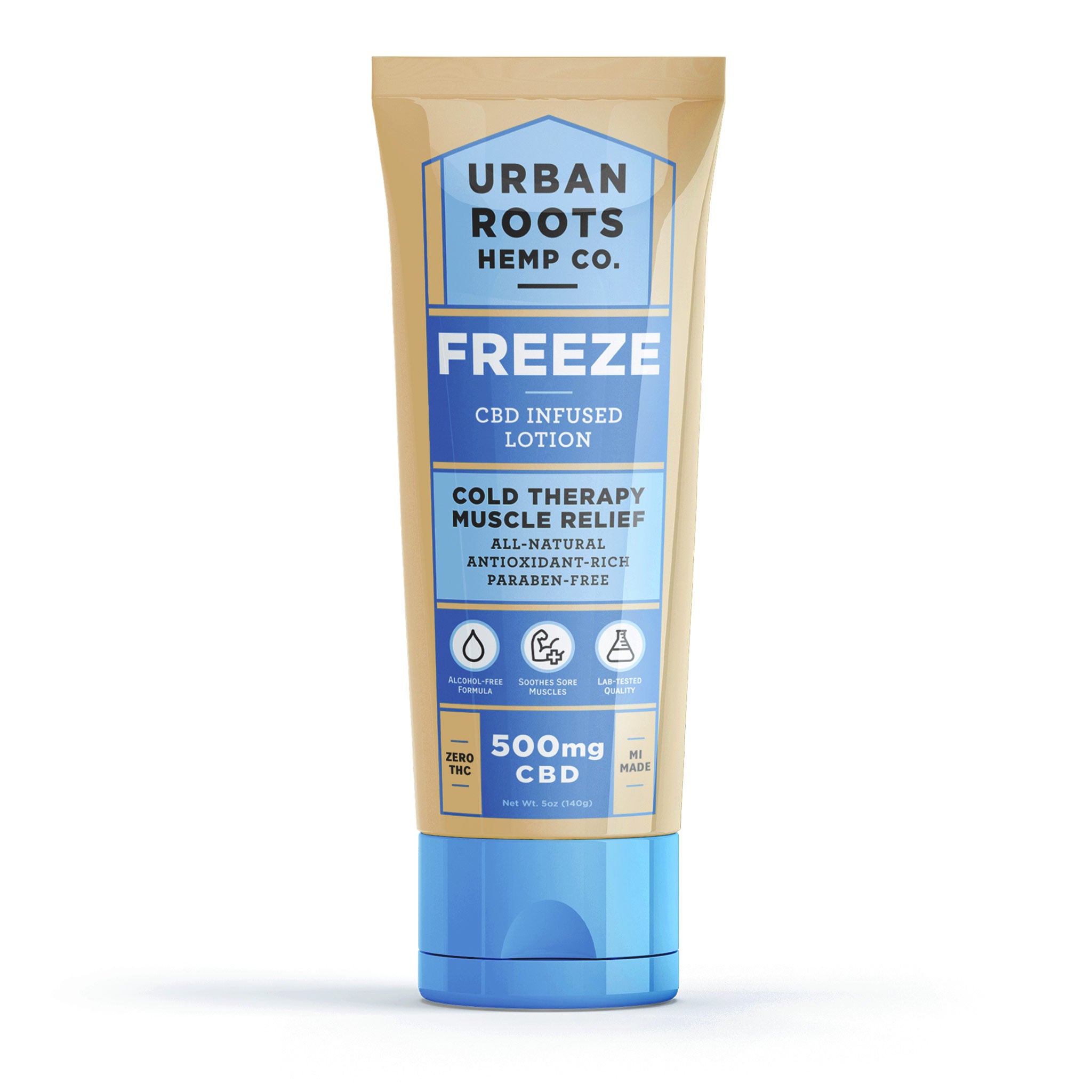
The February 16, 2026 Steadfast report linked for Freeze Lotion identifies sample 2602STD0537.2123, named “FRZ mg/oz CBD.” It reports total CBD of 3.25 mg/g and total THC as ND. Its pesticide, microbial, solvent and metal panels are marked Not Tested, along with several other panels.
This is a dated example for learning how to read the report. Confirm the sample identity, category and lot relationship before using it to assess a particular purchase. The complete PDF includes the laboratory's definitions and limitations; its results do not establish clinical effectiveness or testing of every product.
Compare like-for-like numbers on the label
A bottle or tube total and a concentration describe different quantities. Milligrams per gram describe concentration by weight; milligrams per milliliter describe concentration by volume. Do not treat grams and milliliters as interchangeable. You need compatible units and the relevant product amount to compare a concentration with a container total.
Also distinguish CBD from total cannabinoids. The latter may include cannabinoids other than CBD. Neither the largest container total nor the presence of a COA, by itself, establishes which formula will work best for you.
For a useful comparison, put the current ingredient list, application format, package amount and relevant report together. Our tincture selection guide compares the listed isolate and full spectrum options; our topical guide compares tubes, roll-ons and other formats.
Common questions about CBD lab results
Does “third-party tested” mean contaminant-free?
No. Check which analyses were actually completed and what their results say. A report containing only cannabinoid measurements cannot establish results for unperformed contaminant tests.
Does a cannabinoid report verify the terpene blend?
Not unless it includes the relevant terpene testing. Ask for the product's ingredient information and any applicable terpene report rather than inferring a blend from the CBD amount or product name.
Can an isolate label or an ND result guarantee a negative drug test?
No. The U.S. Department of Transportation's CBD notice warns that CBD product use can lead to a positive drug-test result. Review the requirements that apply to you before deciding whether to use a hemp product.
How can I find the right Urban Roots report?
Start with the lab-results library. If the match is unclear, contact Urban Roots with the product name, strength and any lot information on the package. Ask for the complete report relevant to that product rather than assuming a similarly named PDF is the correct one.
Choose a format, then check its details
Compare 5 oz Freeze Cream with the other topical formats, or explore the tincture guide. Use the product page for current availability and label information, and the report library for the available analytical evidence.
-
Posted in
lab-tested