
Does CBD Help Sunburn?

Yes, CBD may help ease sunburn discomfort. Because sunburn pain, redness, and swelling are driven by your body's inflammatory response to ultraviolet damage, and CBD is studied for its anti-inflammatory and antibacterial properties, CBD topicals like lotions, balms, and body butters are increasingly used as an after-sun option alongside aloe. Research on CBD specifically for sunburn is still limited, so think of it as a comfort measure — not a treatment for burns, and never a replacement for sunscreen.
The sun affects all of us differently. Some people are more prone to sunburns, while others just turn a nice bronze color. But one thing is true for everyone; when you do get burned by the sun, it’s not fun. Not only does it cause pain and discomfort, but it also damages our skin cells and puts us at an increased risk for developing skin cancer.
What Is a Sunburn, Exactly?
A sunburn is your body's inflammatory response to UVA and UVB radiation damaging the outermost layers of your skin, which is what produces the redness, swelling, pain, and eventual peeling.
The main culprit behind your red, painful sunburn is—you guessed it—the sun. More specifically, though, the burn results from ultraviolet light, UVA and UVB rays, penetrating, irritating, and damaging your skin. The symptoms of a sunburn, however, are actually caused by your body’s inflammatory reaction to the ultraviolet radiation damage to the skin’s outermost layers.
A sunburn occurs when your body, sensing something is wrong because of the UV damage to the skin, sends inflammatory cells to the scene of the crime. In its attempt to heal the skin, guard against further damage, and motivate you to get out of the sun, these inflammatory cells cause your skin to become red, swollen, and painful. After sunburn, your body will try to rid itself of the damaged cells, which results in the classic skin peeling.
Can CBD Help Sunburn?
There's no direct clinical research showing CBD heals sunburn, but its anti-inflammatory and antibacterial properties make it a plausible option for easing sunburn symptoms.
Dr. Jeanette Jacknin, MD, a board-certified dermatologist and author of Smart Medicine For Your Skin, points out that there is a lot of potential for CBD to help skin heal from sun damage. She stated that,
“There are studies in which CBD has been shown to help wounds heal, so it might help wounds [and] burns [from the sun], and I think people are looking into the potential [of CBD] as a sunscreen in and of itself.”
However, she is also careful to point out that there is still a lot of research that needs to be done when it comes to CBD and its potential skin care benefits. But when it comes to mixing CBD into your existing sun protection process to add some anti-inflammatory magic, it might not hurt.
CBD’s Anti-Inflammatory Properties
Essentially, what it comes down to is CBD’s potential ability to temper the body’s inflammatory response. As we’ve mentioned many times before, this ability is at the heart of many of the benefits that CBD is thought to provide. More often than not, our bodies have what looks like a one-size-fits-all approach to countering problems, injuries, and perceived issues. However, often the way it reacts ends up causing us more pain and damage than the thing the body is attempting to heal, improve, or mitigate in the first place.
In these cases, what’s needed to make us feel better or improve our condition are substances or drugs that suppress our body’s inflammatory response. With its anti-inflammatory properties, CBD may help to reduce the redness, swelling, and pain that come along with our body’s response to too much time and fun in the sun.
Does CBD Have Antibacterial Properties?
Yes — peer-reviewed laboratory research has shown CBD kills a broad range of bacteria, including antibiotic-resistant strains like MRSA.
If your sunburn is severe enough, then it can also make your skin more vulnerable to bacterial infections. This is another area where CBD may be able to help. There is more and more research being completed looking into whether CBD would be an effective antibacterial or antibiotic medication. Most studies are just preliminary, but so far, the results are looking promising.
A peer-reviewed University of Queensland study published in Communications Biology on the efficacy of CBD as an antibiotic found that it could constitute a new class of antibiotics. The results showed that CBD had antibiotic effects against a number of so-called Gram-positive and Gram-negative bacteria that are responsible for many types of infections.
The main author of the study, Mark Blaskovich, of the University of Queensland’s Institute for Molecular Bioscience's Centre for Superbug Solutions in Brisbane, Australia had this to say: "We still don't know how it works, and it may have a unique mechanism of action given it works against bacteria that have become resistant to other antibiotics, but we still don't know how."
"So far, we have only shown it works topically, on the skin surface. To be really useful, it would be good if we could show that it treated systemic infections e.g. pneumonia, or complicated tissue infections, where you have to give it orally or by intravenous dosing.”
How Do You Use CBD for Sunburn?
Apply a CBD topical directly to intact, unbroken sunburned skin for localized relief, since topicals deliver CBD to the affected area without entering the bloodstream in meaningful amounts. CBD topicals are infused lotions, balms, and oils that are absorbed through the skin for localized relief of pain, soreness, and inflammation, as well as some inflammatory skin rashes and bacterial skin infections. They are non-psychoactive and a completely natural and non-toxic way to treat pain and maintain healthy skin.
Several types of our body’s cannabinoid receptors, CB1 and CB2, have been found throughout the skin. This has led to the thinking that our body’s endocannabinoid system plays an important role in the immune response processes of our skin. And since improper immune response can result in inflammation and other skin conditions, and because CBD interacts with our body’s endocannabinoid system, there has been a great deal of interest in researching CBD topicals and CBD-infused creams as anti-inflammatories for inflammation-related skin conditions.
When you rub a CBD topical into your skin, it penetrates the tissue and interacts with the sensory nerve fibers and adnexal structures in human skin. This is where the CBD is able to access the CB1 and CB2 cannabinoid receptors and assist your body in dealing with and regulating the inflammation, pain, rash, or whatever skin, muscle, or joint issue you may be suffering from.
In addition to potentially treating sunburns, CBD topicals are also commonly used for the following conditions:
- Muscle pain
- Inflammatory skin conditions
- Psoriasis
- Eczema
- Itchy Rashes
- Joint pain (arthritis pain)
- Joint swelling
- Neck and back pain
- Contact dermatitis
- Acne
- Nerve pain
- Bacterial infections (MRSA)
 |
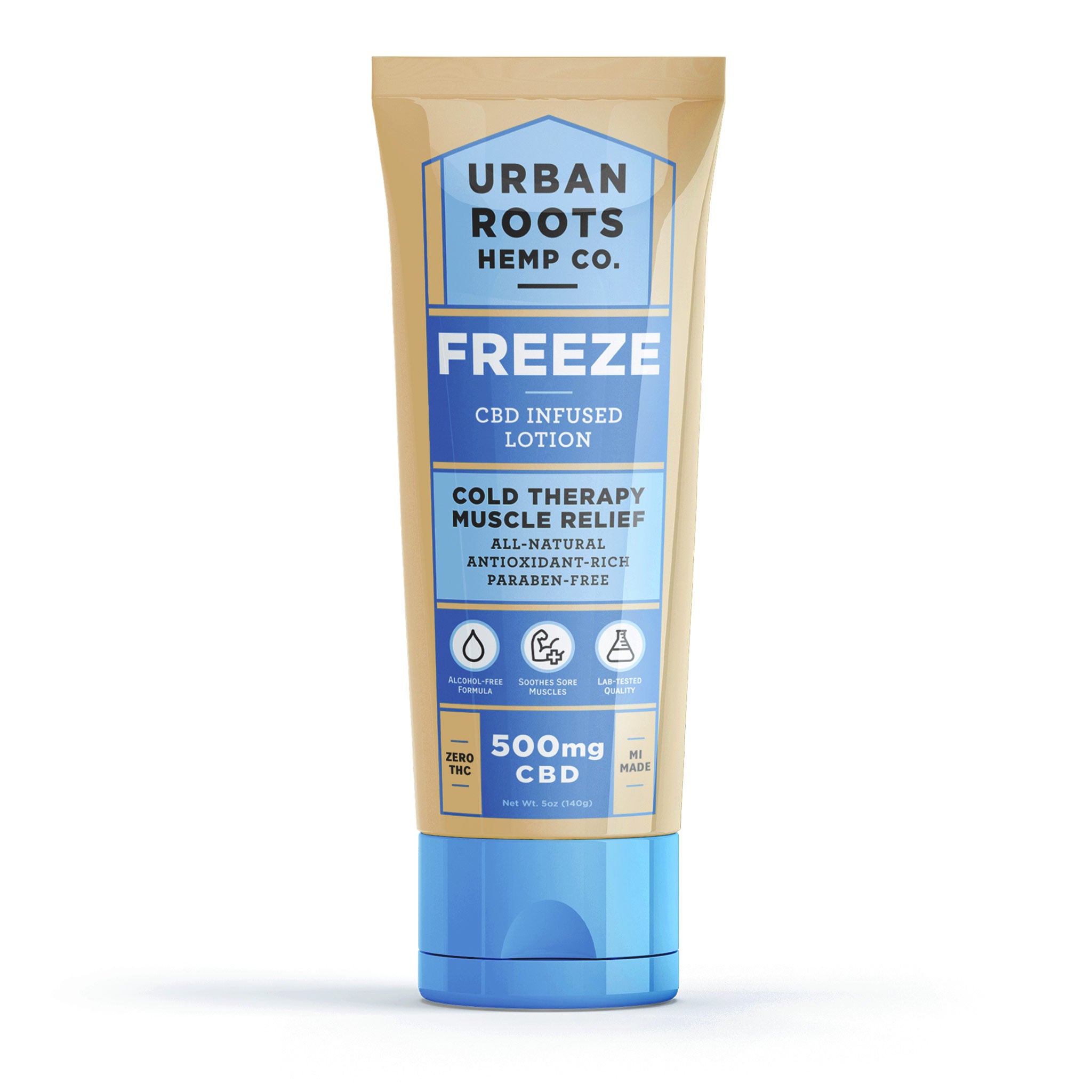
Try Our CBD Topical Products We offer natural, pain-relieving topicals infused with pure hemp-derived CBD that will leave your skin feeling smooth and nourished. Our Body Butter and Face Moisturizer work great after a day in the sun! |
Using CBD for Sunburns
Sunburns are unpleasant. Coming from someone who has experienced more than their fair share of them, I can tell you that I now have an addiction to sunscreen that borders on an obsession. But if you do get burned, then there are ways that you can relieve your discomfort and protect your skin from any further issues. CBD’s anti-inflammatory and antibacterial properties make it an ideal candidate for after sun topical products.
Topical CBD is generally well tolerated, with side effects usually limited to skin irritation from other ingredients in a formula — so patch test a new product first.
Frequently Asked Questions (FAQ)
Does CBD cream help sunburn?
CBD cream may help reduce the redness, swelling, and discomfort of a sunburn thanks to its anti-inflammatory properties, but it won't heal the skin damage itself.
Is CBD or aloe better for sunburn?
Aloe has a much longer track record and more research behind it for sunburn relief; CBD is a newer option that some people use alongside or instead of aloe.
Will CBD get you high if you put it on a sunburn?
No — CBD is non-intoxicating, and topicals aren't absorbed into the bloodstream in amounts that would cause any psychoactive effect.
Can you put CBD on blistered or peeling skin?
No — avoid applying any topical to blistered or broken skin, and see a doctor for a burn that blisters extensively.
Does CBD work as a sunscreen?
No — CBD is not a sunscreen and offers no SPF protection, so you still need a broad-spectrum sunscreen.
How soon after a sunburn should you apply CBD?
Cool the skin first with a cool shower or compress, then apply a CBD topical once the skin is no longer hot to the touch.
Are there side effects to using CBD topically?
Topical CBD is generally well tolerated, but some people experience skin irritation or an allergic reaction to other ingredients in the product — patch test first.